Questions? Call us!
+1 (978) 295-7538
Mon-Fri: 9AM - 5PM EST
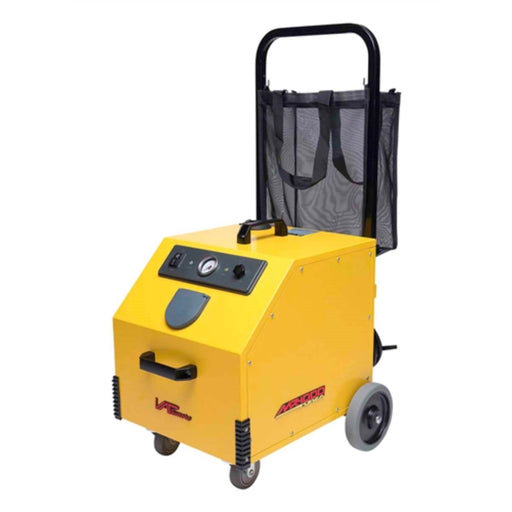
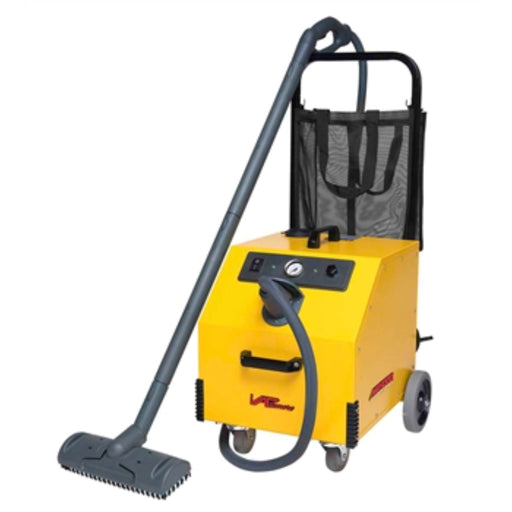
MR1000 Forza Steam Cleaner — Chemical-Free Sanitizing at 75 PSI for Commercial Facilities The Vapamore MR-1000 Forza is a continuous-steam commerci...
View full detailsThree Hours of 75 PSI Steam from a 4-Liter Stainless Boiler The Vapamore MR750 Ottimo runs on a 1600W heating element that brings a 4-liter stainle...
View full detailsA commercial steam cleaner runs a higher-pressure, continuous-fill boiler that holds temperature through a full shift instead of cooling between tasks. The machines here run 212°F to 380°F at 52 to 1,300 PSI, hot enough that moist heat breaks down grease and destroys pathogens on contact without chemicals, which is why steam is used for food-contact sanitizing and healthcare disinfection (CDC disinfection guidance). The range covers dry vapor, propane and electric industrial steamers from Therma-Kleen, Vapamore, NaceCare, Tornado, Sargent Steam, Namco, Dapper Supply and Bissell, from compact handhelds to 40kW three-phase production machines.
Match the boiler type to the job. Dry vapor units like the Therma-Kleen TS.75 (80 PSI, 300°F) and TS10 (100 PSI, 330°F) produce low-moisture steam that dries fast, ideal for healthcare, hospitality, and detailing where surfaces cannot stay wet. Propane steamers such as the Ultra 250 and Ultra 600 (250 to 600 PSI) deliver high heat off-grid for parking garages, fleet washing, and outdoor food operations. Electric three-phase industrial machines like the TSXL2 and Therma-Steem XL3 (155 PSI, up to 40kW) run continuously in food processing and manufacturing where a shift never stops. Compact handhelds from Vapamore, Sargent Steam, Namco and Dapper Supply cover spot work, grout, and detailing for a few hundred dollars rather than a few thousand.
Restaurants and commercial kitchens use steam to cut baked-on grease from hoods, fryers, and floor drains and to sanitize food-contact surfaces without residue. Healthcare and medical facilities rely on chemical-free steam for infection control on high-touch surfaces. Auto detailers run compact dry vapor steamers to clean interiors, upholstery, and engine bays with minimal water and no chemical residue. Hotels, gyms, and locker rooms use steam for grout, tile, and fixtures where mold and odor build up. In each case heat does the work a chemical otherwise would, and uses far less water than a pressure washer.
Related: Dry Vapor Steam Cleaners · Propane Steam Cleaners · Steam Cleaners for Bed Bugs · Carpet Extractors
What is the best commercial steam cleaner?
It depends on the surface and the environment. For chemical-free healthcare and hospitality sanitizing, the dry vapor Therma-Kleen TS.75 (80 PSI, 300°F) and TS10 (100 PSI, 330°F) dry fast and leave no residue. For grease-heavy restaurant kitchens, a propane Ultra 250 or 600 delivers the sustained heat that cuts baked-on fat. For food processing and manufacturing that run continuous shifts, the electric three-phase TSXL2 or Therma-Steem XL3 hold pressure all day. Match the boiler type to the job before the brand.
Do commercial steam cleaners actually sanitize?
Yes. Moist heat above roughly 250°F denatures the proteins in bacteria, viruses, and mold on contact. The dry vapor, propane and industrial machines here clear that comfortably; the compact handhelds run 212°F to 230°F, which handles grease and soil but sits at the edge of the sanitizing range. Dwell time matters either way: hold the nozzle on a spot for several seconds rather than passing over it quickly.
What is the difference between dry steam and wet steam?
Dry vapor steam carries about 5 to 6 percent water content, so it sanitizes and lifts grime while leaving surfaces nearly dry, the reason it suits electronics, upholstery, and healthcare. Wet or saturated steam carries more water and more thermal mass, better for flushing heavy grease and debris down a drain. Dry vapor units run lower PSI; propane and high-output electric machines produce wetter, higher-volume steam.
How much does a commercial steam cleaner cost?
Handheld and compact units start near $200 to $400. Commercial dry vapor machines run about $2,300 to $3,600 (Therma-Kleen TS.75, TS10). Propane and mid-output electric machines run about $5,500 to $8,600 (Ultra 250, Ultra 600). Full industrial three-phase production steamers reach $20,000 and up (TSXL2, Therma-Steem XL3). Match output to the surface and shift length rather than paying for capacity you will not use.
Free Sizing Tools
Answer a few questions and get a spec-matched recommendation from our free calculators — no email required.
Enter room size and conditions to get the right pints-per-day capacity for your space.
Use the calculator →Match CFM and air changes per hour to your room for mold, dust, and restoration jobs.
Use the calculator →Size a walk-behind or ride-on scrubber to your floor area and cleaning schedule.
Use the calculator →Plan how many air movers and dehumidifiers a water-loss job needs, by class and size.
Use the calculator →Perfect vacuum cleaner. Well made , goes around chair & table legs easily
Nice compact scrubber/vacume. Works very well.
Fast shipping Great Experience
Great product
This vacuum is very light and powerful
Gets the job done without hassle. This vacuum is powerful and reliable for everyday cleaning. Definitely recommend it.
we have three cats, and this purifier has done wonders in removing pet odors and dander
Located in the Twin Cities in Minnesota, we acquired our Brio Air Filter in mid-late Spring of this year (2023) when pollen count was high and we were beginning to experience the effects of Poor Air Quality Index as a result of smoke particulates from fires in Canada that caused the air in much of Minnesota to become hazy and simply dirty.
It is so easy to share our experience with the Brio Air Filter given how quickly and efficiently it removed pollen, dust, and smoke particles from the environment inside our home. Two people in our home who suffer from pollen-related allergies during the spring immediately experienced easier breathing and elimination of symptoms within the house. With respect to smoke particulates from Canada drifting into our environment, EVERYONE in our home experienced directly improved breathing and smell of the air when entering from outside.
An additional piece of information to account for is that we have always employed high grade furnace filters in our home’s central HVAC system. With that high grade filtration in place both prior to and after acquiring a Brio home air filter, we all quickly agreed that deploying the Brio in our home made an easily noticeable positive difference in breathing inside our home. Additionally, those of us who clean our home have observed that dust builds up slower on our floors and furniture than before we deployed the Brio unit.
We did note that the Brio is not as quiet as a few other brands/models on the market that we have tried in our home but the efficiency and quality of the filtration, along with the air turnover rate it provides,allows us to locate the Brio unit in central rooms away from the bedrooms. Since we made that change there has been no noise-related effect on our sleep, while the unit maintains the same level of air cleanliness throughout our home.
A last key point to make is how easy the Brio unit is to maintain. The simplicity of the modular construction of the Brio unit makes it very quick and easy to keep the filtration sections clean. We have not yet reached a point of filter replacement but it is obvious to us that the replacement will take a matter of seconds and can be executed by anyone in our home, including our 10-year-old son.
this bedroom purifier has transformed my sleep quality. the air is so much fresher and cleaner worth every penny
Amazing customer service and reliable products
very customer friendly and professional design.
perfect for maneuvering in tight areas the HEPA filter is a huge bonus
It seems to help reduce my allergy issues. We're glad we bought it. The only problem I had was not seeing any cubic footage recommendations in the online description when purchasing the unit. Bedrooms vary widely in size!!
This vacuum has exceeded my expectations. It's super powerful and handles daily cleaning with ease. I recommend it to everyone.
really effective in sweeping up all kinds of debris from our warehouse floor
{"one"=>"Select 2 or 3 items to compare", "other"=>"{{ count }} of 3 items selected"}