Questions? Call us!
+1 978-295-7538
Mon-Fri: 9AM - 5PM EST
Free Shipping on Most Orders
Orders over $300 ship free to the continental US. Threshold may vary by brand.
Expert Support
Talk to a specialist — not a call center.
+1 978-295-7538
30-Day Returns
Not the right machine? Return or exchange within 30 days, no hassle.
Authorized Dealer
30 pro brands sold direct. Full manufacturer warranties honored.
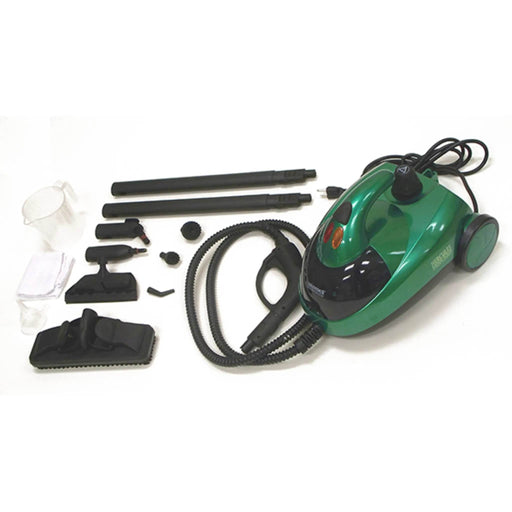
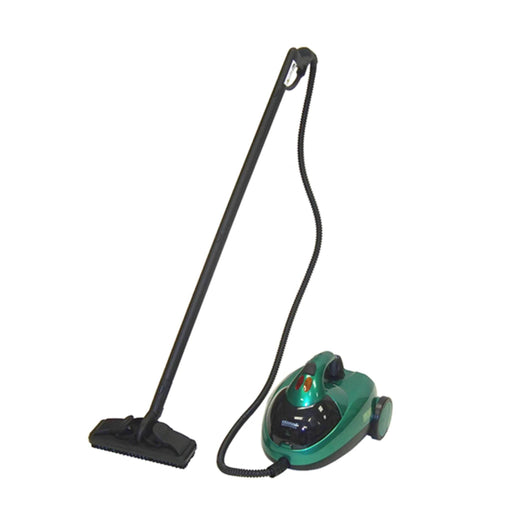
Bissell BGST500T Hercules Vapor Scrub Steam Cleaner The Bissell Hercules Vapor Scrub harnesses the power of 1500-watt steam to sanitize and clean s...
View full detailsSteam at 212 degrees Fahrenheit kills most common bacteria on contact. Dry steam units operating at 300 to 350 degrees Fahrenheit achieve sanitizing benchmarks on hard surfaces without chemical residue. The EPA's registered disinfectants guidance distinguishes between cleaning, sanitizing, and disinfecting: steam sanitizes but does not disinfect at the clinical level without extended dwell time. Grease responds differently. High-temperature steam emulsifies cooking oils on hood filters and tile grout in food preparation areas, which allows one operator to clean surfaces in a fraction of the time required by chemical scrubbing. Jiffy Steamer machines are built specifically for garment and textile applications. Sargent Steam industrial units handle floor grout and food equipment at temperatures that break down carbonized deposits in commercial kitchens.
Dry steam contains less than 5 percent moisture by volume. It cleans and sanitizes without leaving surfaces wet, which matters on electronic equipment panels, upholstered seating, and sealed wood floors. Wet steam carries more water and works better on thick grease deposits and embedded soil in tile grout, but requires drying time afterward. Vapamore machines produce dry vapor at consistent temperature with adjustable pressure, which makes them a practical choice for facilities cleaning across multiple surface types. Therma-Kleen's commercial line includes units rated for continuous 8-hour operation in production environments where stopping to refill disrupts workflow. OSHA standard 1910.141 on workplace sanitation defines cleanliness requirements that steam-only programs can satisfy in environments where chemical use is restricted.
Related: Carpet Extractors · Floor Care Equipment · Electric Commercial Pressure Washers
Single-boiler steam cleaners require a cool-down period before refilling under pressure. In a commercial kitchen or production facility running continuous shifts, that pause costs time. Dual-boiler designs maintain steam output while one chamber refills, eliminating dead time. Tank capacity translates directly to run time: a 1-liter boiler produces roughly 30 to 45 minutes of continuous steam. Sargent Steam's larger commercial units carry enough water for extended sessions in restaurant hoods and tile areas. For restoration contractors addressing mold on porous surfaces, steam penetrates grout lines and crevices that surface spraying misses, and leaves no chemical residue that would interfere with post-treatment testing. Therma-Kleen units designed for decontamination work carry certifications that documentation-dependent environments require before approving the equipment for use on-site.
Nice compact scrubber/vacume. Works very well.
Fast shipping Great Experience
Great product
This vacuum is very light and powerful
Gets the job done without hassle. This vacuum is powerful and reliable for everyday cleaning. Definitely recommend it.
we have three cats, and this purifier has done wonders in removing pet odors and dander
Located in the Twin Cities in Minnesota, we acquired our Brio Air Filter in mid-late Spring of this year (2023) when pollen count was high and we were beginning to experience the effects of Poor Air Quality Index as a result of smoke particulates from fires in Canada that caused the air in much of Minnesota to become hazy and simply dirty.
It is so easy to share our experience with the Brio Air Filter given how quickly and efficiently it removed pollen, dust, and smoke particles from the environment inside our home. Two people in our home who suffer from pollen-related allergies during the spring immediately experienced easier breathing and elimination of symptoms within the house. With respect to smoke particulates from Canada drifting into our environment, EVERYONE in our home experienced directly improved breathing and smell of the air when entering from outside.
An additional piece of information to account for is that we have always employed high grade furnace filters in our home’s central HVAC system. With that high grade filtration in place both prior to and after acquiring a Brio home air filter, we all quickly agreed that deploying the Brio in our home made an easily noticeable positive difference in breathing inside our home. Additionally, those of us who clean our home have observed that dust builds up slower on our floors and furniture than before we deployed the Brio unit.
We did note that the Brio is not as quiet as a few other brands/models on the market that we have tried in our home but the efficiency and quality of the filtration, along with the air turnover rate it provides,allows us to locate the Brio unit in central rooms away from the bedrooms. Since we made that change there has been no noise-related effect on our sleep, while the unit maintains the same level of air cleanliness throughout our home.
A last key point to make is how easy the Brio unit is to maintain. The simplicity of the modular construction of the Brio unit makes it very quick and easy to keep the filtration sections clean. We have not yet reached a point of filter replacement but it is obvious to us that the replacement will take a matter of seconds and can be executed by anyone in our home, including our 10-year-old son.
this bedroom purifier has transformed my sleep quality. the air is so much fresher and cleaner worth every penny
perfect for maneuvering in tight areas the HEPA filter is a huge bonus
It seems to help reduce my allergy issues. We're glad we bought it. The only problem I had was not seeing any cubic footage recommendations in the online description when purchasing the unit. Bedrooms vary widely in size!!
This vacuum has exceeded my expectations. It's super powerful and handles daily cleaning with ease. I recommend it to everyone.
really effective in sweeping up all kinds of debris from our warehouse floor
works wonders on tough carpet stains. it's compact and easy to use for upholstery cleaning too
{"one"=>"Select 2 or 3 items to compare", "other"=>"{{ count }} of 3 items selected"}